Modern retail POS solutions have made this entire relay invisible — what once took minutes now completes in under 2 seconds. A single ₹500 contactless payment involves 27 different technology systems, communicates across 4 organizations, and travels 12,000+ kilometers through fiber optic cables. All in under 2 seconds. Before you’ve put your card back in your wallet, it has already cleared real-time fraud checks, crossed multiple security layers, and returned with an approval.
Twenty years ago, you’d watch it happen. Swipe, wait, print. Today, it’s just a beep. The complexity hasn’t gone away. We’ve simply hidden it so well that a multi-party, internationally-routed financial transaction now feels as effortless as flipping a light switch. Behind that single beep, a payment is being processed through banks, networks, and processors. What really happens in those few seconds between hitting “Pay” and seeing “Approved”?
The Transaction Initiation
Every payment begins with a signal. Depending on your card or device, the POS terminal reads your details in one of two ways. Through an NFC chip for contactless payments, or an EMV chip when you insert your card. Each method captures your payment credentials and triggers the powerful chain of events behind the scenes.
The Payment Authorization Process
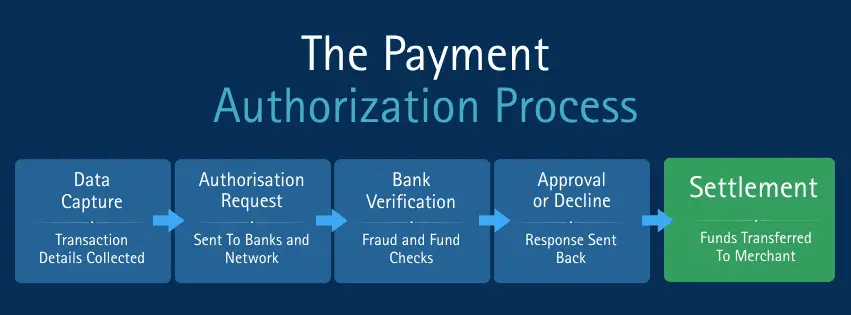
- Data Capture:
In the terminal, the POS machine reads your card or device details and converts them into an encrypted token. Not your actual card number, but a one-time secure code that represents it. This tokenization ensures your sensitive data never travels raw across the network.
- Authorization Request:
That encrypted data is sent from the POS terminal to a payment processor, which forwards it to the relevant card network – Visa, Mastercard, or RuPay. The network then routes the request directly to your issuing bank.
- Bank Verification:
The issuer’s bank now takes over. It checks your account balance, verifies your card status, and runs fraud detection, all in milliseconds. This process between the terminal and your bank is what makes modern payments feel instantaneous.
- Approval or Decline:
Some transactions require a PIN before final approval. Based on the verification, your bank sends an approval or decline signal back through the same chain, the card network to the processor to the terminal. The beep you hear is the confirmation arriving at the end of this round trip.
- Settlement:
Once approved, the funds are held against your account. Settlement happens either instantly or in batches periodically. Settlement timelines vary by payment mode. While UPI transactions are credited to merchants in near real-time, card payments like credit card, debit card, RuPay, Mastercard etc., typically follow T+1 to T+3 settlement cycles. After deducting applicable network and processing fees, the net amount is transferred to the merchant’s account, completing the payment lifecycle.
Accepted Payment Methods at a POS Terminal
Modern retail POS solutions support all of these methods natively, removing the need for separate hardware per payment type.
- Contactless (NFC): Your phone communicates with the terminal wirelessly using NFC technology. A one-time encrypted token is generated for that transaction alone, making it one of the fastest and most secure ways to pay.
- Chip & PIN (EMV): The chip on your card creates a unique transaction code each time it is used, making it virtually impossible to duplicate. The PIN adds a second layer of identity verification, ensuring only the rightful cardholder can authorize the payment.
- UPI & QR: Scanning a QR code or entering a UPI ID triggers an instant, real-time transfer between two bank accounts, routed via NPCI switch without any card network involved.
- Mobile Wallets: Apps like Google Pay, PhonePe, and Paytm store a digital version of your card or bank details securely on your phone. When you pay, the app communicates with the terminal via NFC or QR. Your phone’s biometric or PIN acts as the final authentication before the payment goes through.
Key Technical Capabilities of a POS Terminal
Choosing the right POS system for business means looking beyond payment acceptance. A few core capabilities include:
- NFC Capability: Enables contactless payments, mobile wallets, and wearable integrations from a single tap
- OTA Updates: Over-the-Air firmware updates push security patches and new features remotely, with zero manual intervention and zero downtime
- Connectivity: Seamless switching across 4G, WiFi, and cellular ensures transactions go through even in low-network environments.
iServeU's POS: Built For Every Step Of The Payment Journey
iServeU’s range of POS devices handles every layer of this payment chain.
The Android POS is built for high-volume transactions with rugged durability and dynamic UPI support. The Linux-Based POS offers malware resistance and a long device lifespan for cost-efficient deployments. The All-in-One POS combines unified payment acceptance with audio confirmation, ideal for grocery and pharmacy outlets. And the MPOS is compact enough for doorstep delivery and agent banking operations.
All devices come with NFC support, OTA update capability, NPCI-certified processing, PCI DSS-certified and multi-network connectivity, making iServeU’s POS infrastructure ready for banks, fintechs, and NBFCs deploying at any scale.
But what truly sets iServeU apart is its POS software solution . A single, tightly integrated platform combining device management, payment orchestration, compliance, and real-time analytics, giving banks and fintechs the power to launch faster and scale effortlessly.
Conclusion
The right POS system for business is no longer just a checkout device. What feels like a routine action is actually a real-time relay across terminals, processors, networks, and banks. All secured by encryption, tokenization, and compliance-grade protocols. The POS terminal at the counter is not just a payment device, it is where banking infrastructure meets everyday commerce.
**Did you know?
In India, the average contactless transaction takes only 1.8 seconds to authorize!
Author

Pratyush Kumar Sethy, Product Manager(POS)
Turning complex payment challenges into simple merchant experiences. I work on building scalable POS products, driving payment innovation, and enabling seamless merchant acquiring and settlement solutions that empower 1.5L+ merchants to accept digital payments with confidence.




Great post! Thanks for sharing this valuable information. Keep up the excellent work.